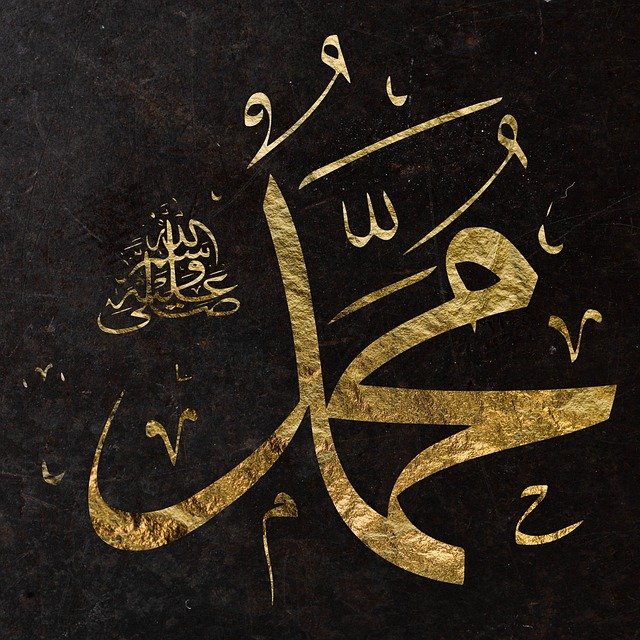
The Life of Prophet Muhammad ﷺ — The Final Messenger to All of Mankind
He was born an orphan in a desert city, lived in poverty, lost everyone he loved, was mocked and driven from his home — and yet became the most influential human being who ever lived. This is the complete story of the Prophet Muhammad ﷺ — from his birth in the Year of the Elephant to his final words on earth, told with care, depth, and faithfulness to the Quran and authentic Sunnah.
- The Noble Lineage of the Prophet ﷺ
- Birth in the Year of the Elephant
- Orphanhood, Wet-Nursing and Early Childhood
- Youth, Character and the Title Al-Amin
- Marriage to Khadijah رضي الله عنها
- The Cave of Hira and the First Revelation
- The Early Muslims — Three Years of Secret Da'wah
- The Persecution of the Muslims in Makkah
- The Three-Year Boycott and the Year of Grief
- The Journey to Ta'if — The Hardest Day
- The Night Journey and the Ascension — Isra wal Mi'raj
- The Hijra — Migration to Madinah
- Building the First Islamic State in Madinah
- The Battle of Badr — 313 Against 1,000
- The Battle of Uhud and Its Lessons
- The Battle of Khandaq — The Trench
- The Treaty of Hudaybiyyah — A Manifest Victory
- Letters to the Kings of the World
- The Conquest of Makkah — No Revenge, Only Mercy
- The Farewell Pilgrimage and the Last Sermon
- The Death of the Prophet ﷺ
- His Character — How Those Who Knew Him Described Him
- His Legacy — The Man Who Changed the World
The life of the Prophet Muhammad ﷺ — the complete Islamic biography (Seerah) — is the most documented life of any person in ancient history. Every detail recorded here is drawn from the Quran, Sahih Bukhari, Sahih Muslim, and the established books of Seerah, primarily Ibn Hisham's Al-Sirah Al-Nabawiyyah and Ibn Kathir's Al-Bidayah wan-Nihayah.
The Noble Lineage of the Prophet ﷺ
Muhammad ibn Abdullah ibn Abd al-Muttalib ibn Hashim — this is the prophetic lineage. Every name in this chain is honoured. His family, the Banu Hashim, were the most noble of the Quraysh, and the Quraysh were the most honoured tribe of Arabia — the custodians of the Kaabah, the descendants of Ibrahim and Ismail عليهما السلام.
The Prophet ﷺ himself described his lineage with pride — not the pride of arrogance, but the pride of one acknowledging the grace of Allah:
His father was Abdullah ibn Abd al-Muttalib — a young man of extraordinary beauty and honour, who died before his son was born. His mother was Aminah bint Wahb — a woman of dignified lineage from the Banu Zuhrah clan. The Prophet ﷺ was thus an orphan before he even entered the world.
Birth in the Year of the Elephant
He was born in Makkah in what is known as the Year of the Elephant — the year Abraha, the Christian Abyssinian ruler of Yemen, marched upon Makkah with a great army carrying war elephants, intending to destroy the Kaabah. Allah destroyed that army with flocks of birds carrying stones of hardened clay — an event recorded in Surah Al-Fil, one of the shortest but most striking chapters of the Quran.
The year was approximately 570 CE. The scholarly consensus places his birth on the 12th of Rabi' al-Awwal, though there are other opinions on the exact date. What is undisputed is the month and the year. He was born into a world that desperately needed him — a world of tribal warfare, buried daughters, slave markets, and spiritual emptiness — and he would transform it entirely within sixty-three years.
His grandfather Abd al-Muttalib received news of the birth and took the infant to the Kaabah, gave thanks to Allah, and named him Muhammad — a name that had never been used among the Arabs before. "The praised one." As though even his name was a prophecy.
Orphanhood, Wet-Nursing and Early Childhood
According to the Arab custom of the time, newborns from noble Makkan families were sent to the desert to be raised by Bedouin wet-nurses — the desert air was considered healthier, and the children would return speaking pure classical Arabic. The infant Muhammad ﷺ was given to Halimah al-Sa'diyah of the Banu Sa'd tribe.
Halimah later narrated that from the moment she took the child, blessings followed her. Her previously dry camel became full of milk. Her previously thin donkey outpaced all others on the road home. Her land produced where it had not before. The household of Halimah experienced such visible barakah that she was reluctant to return the child when the time came.
A significant event occurred during his time with Halimah — the opening of the chest (Shaqq al-Sadr). Two men in white (understood by scholars to be angels) came to the young child, opened his chest, removed a black clot — described as the portion of Shaytan — washed his heart with Zamzam water, and returned it. This event is confirmed in Sahih Muslim and is referenced in the Quran:
Halimah returned him to his mother Aminah, frightened by what had happened. Muhammad ﷺ returned to Makkah. He was then approximately six years old when his mother Aminah took him to visit relatives in Madinah — the city then known as Yathrib. On the journey back, Aminah fell ill and died, and was buried at a place called Al-Abwa. The Prophet ﷺ would later pass by her grave and weep — and he was seen weeping by his Companions, causing them to weep too. He said: "I asked permission from my Lord to pray for forgiveness for her and it was not granted to me. And I asked permission to visit her grave and it was granted to me."
He was now fully orphaned — no father, no mother. His grandfather Abd al-Muttalib took him in with deep love and care, but Abd al-Muttalib died just two years later. The eight-year-old child had now lost his father, his mother, and his grandfather. He was taken in by his uncle Abu Talib — a man of honour who would protect his nephew until the end of his own life, even without ever accepting Islam.
Youth, Character and the Title Al-Amin
As a young man, Muhammad ﷺ worked as a shepherd — a humble profession, but one he later noted with wisdom: "There was no prophet who was not a shepherd." He accompanied his uncle Abu Talib on trade journeys to Syria. On one of these journeys, a Christian monk named Bahira is reported to have recognised signs of prophethood in the young Muhammad — this narration is recorded in the books of Seerah, though with varying chain strengths, and Muslim scholars treat it as probable context.
What is certain and widely narrated is his reputation among his people. By the time he reached his twenties, all of Makkah knew him by one name above all others: Al-Amin — The Trustworthy. In a society where tribal loyalties and personal advantage drove almost every decision, Muhammad ﷺ was the man people trusted unconditionally. They left their valuables with him for safekeeping. They brought their disputes to him for arbitration. They swore by his integrity.
He also participated in what is known as Hilf al-Fudul — an alliance among some of the noble men of Makkah to defend the rights of the oppressed, regardless of tribal affiliation. The Prophet ﷺ later said of this alliance: "I was present in the house of Abdullah ibn Jud'an when an agreement was made that I would not exchange for a herd of red camels, and if I were invited to it in Islam, I would accept."
Before prophethood, before revelation, before any command from Allah — the Prophet ﷺ was already the most honest, most principled man in Makkah. This tells us something important: prophethood does not make a man righteous. It reveals and confirms a righteousness that was already there. Allah chooses whom He wills, and He chooses only the finest.
He also participated, as a young man, in the rebuilding of the Kaabah after it was damaged by floods. When the time came to replace the sacred Black Stone (Al-Hajar al-Aswad) into its corner, the tribal leaders fell into a fierce dispute — each tribe wanting the honour of placing it. A civil war was about to break out over who would carry it. An elder suggested: let the first man to enter through the gate decide. The first man to enter was Muhammad ﷺ. He placed the stone in a cloth, asked each tribal leader to hold an edge, and together they lifted it to its place — where he then placed it with his own hands. Every tribe shared the honour. Every potential war was averted. He was thirty-five years old. Prophethood was still five years away.
Marriage to Khadijah رضي الله عنها
Khadijah bint Khuwaylid was a wealthy, twice-widowed businesswoman of Makkah — one of the most respected and successful merchants in Arabia. She employed men to trade on her behalf, and Muhammad ﷺ came to her attention through his extraordinary reputation. She sent him on a trading journey to Syria with her servant Maysarah, who returned reporting not only great commercial success but also remarkable qualities he had observed in Muhammad ﷺ throughout the journey.
Khadijah was forty years old. Muhammad ﷺ was twenty-five. She proposed marriage to him — through an intermediary, as was customary. He accepted. Their marriage was one of the great love stories of history, and one of the greatest partnerships in the service of truth the world has ever seen.
They had six children together: two sons — Al-Qasim and Abdullah (also called Al-Tayyib and Al-Tahir) — both of whom died in infancy, a grief that broke the Prophet's heart. And four daughters — Zaynab, Ruqayyah, Umm Kulthum, and Fatimah رضي الله عنهن — all of whom lived to see Islam, and all of whom embraced it. Fatimah, the youngest, was his most beloved, and the only one to outlive him — though only by six months.
For twenty-five years, until Khadijah's death, the Prophet ﷺ took no other wife. In a society of polygamy, he remained in a monogamous marriage with an older woman — and loved her completely. He would speak of her with tenderness and grief for the rest of his life, to the point where his later wife Aisha رضي الله عنها once said she was never more jealous of any woman than Khadijah — even though she had never met her.
The Cave of Hira and the First Revelation
For years before prophethood, Muhammad ﷺ had been given to solitary reflection. He would take provisions and retreat to a cave on the mountain of Hira — Jabal al-Nour, the Mountain of Light — just outside Makkah, sometimes for days at a time, contemplating, seeking, longing for truth in a world drowning in falsehood. He did not worship the idols of his people. He was, as the Quran would later call him, hanif — naturally inclined toward the pure truth.
It was during one of these retreats, in the month of Ramadan, in the year 610 CE — when Muhammad ﷺ was forty years old — that the angel Jibreel عليه السلام came to him. The account in Sahih Bukhari, narrated by Aisha رضي الله عنها, is one of the most detailed and moving in all of hadith:
Jibreel came to him and said: "Read." Muhammad ﷺ said: "I cannot read." Jibreel embraced him tightly until he was exhausted, then released him and said "Read" again. Again he replied he could not read. Jibreel embraced him a second time, then a third, then released him and recited:
The Prophet ﷺ returned home trembling, his heart beating violently. He said to Khadijah: "Cover me, cover me." She covered him. When he calmed, he told her everything and said: "I feared for myself." Khadijah — without hesitation, without doubt, in a moment that would define her legacy forever — said the words that every believer knows:
"By Allah, Allah will never disgrace you. You keep good relations with your relatives. You carry the burdens of others. You earn for the poor. You honour your guests. You help those in distress." And then she took him to her cousin Waraqah ibn Nawfal — an elderly scholar of the Christian scriptures — who told the Prophet ﷺ: "This is the Namus (divine revelation) that was sent down to Musa. I wish I were young. I wish I would be alive when your people drive you out." He was shocked: "Will they drive me out?" Waraqah said: "Yes — no man has come with what you have brought except that he was treated with enmity."
Khadijah was the first to believe. She was the first Muslim. Before Abu Bakr, before Ali, before anyone — it was Khadijah who, at the very first moment, believed completely, comforted her husband, and never wavered for a single day for the rest of her life. May Allah be pleased with her.
The Early Muslims — Three Years of Secret Da'wah
For the first three years after the first revelation, the Prophet ﷺ preached quietly, privately, to those closest to him. This was by divine instruction — not cowardice, but wisdom. The first Muslims formed in small, intimate groups, built on personal conviction rather than public momentum.
After Khadijah, Ali ibn Abi Talib رضي الله عنه — the Prophet's young cousin, living in his household — believed. He was approximately ten years old. Then Abu Bakr al-Siddiq رضي الله عنه — the Prophet's closest friend, a man of deep intelligence and profound generosity. Then Zayd ibn Harithah رضي الله عنه — a freed slave who had chosen to remain with the Prophet ﷺ even when given the choice of returning to his family. And then the stream began to grow.
Abu Bakr alone brought to Islam five men who would each become among the greatest Companions: Uthman ibn Affan, Abd al-Rahman ibn Awf, Zubayr ibn al-Awwam, Talhah ibn Ubaydullah, and Sa'd ibn Abi Waqqas — all of whom were later given the glad tidings of Paradise by the Prophet ﷺ himself.
They gathered in the house of Al-Arqam ibn Abi Al-Arqam near the Kaabah — a location that would become famous in Islamic history as the first centre of Islamic learning and community. The Prophet ﷺ taught them, the Quran came down to him, and a community of faith began to take shape — quietly, carefully, and with great love between them.
The Persecution of the Muslims in Makkah
When Allah commanded the Prophet ﷺ to preach publicly — "So proclaim what you have been commanded and turn away from the polytheists" (Surah Al-Hijr 15:94) — the response from the Quraysh leadership was swift, organised, and brutal.
The persecution took many forms. For those with tribal protection — like the Prophet ﷺ himself, protected by Abu Talib — the attacks were verbal: mockery, slander, accusations of madness and sorcery. But for those without tribal protection — the slaves, the poor, the foreigners who had embraced Islam — the attacks were physical and savage.
Bilal ibn Rabah رضي الله عنه
Bilal was an Abyssinian slave owned by a man named Umayyah ibn Khalaf. When Umayyah discovered Bilal had become Muslim, he would drag him into the burning midday heat of Makkah, lay him on his back on the scorching ground, place an enormous boulder on his chest, and demand he renounce Islam. Bilal's response, every single time, was one word: "Ahad. Ahad." — "One. One." Meaning: Allah is One. I will not deny it.
Abu Bakr رضي الله عنه passed by one day and could not bear it. He went to Umayyah and purchased Bilal's freedom on the spot — paying whatever price was demanded. The Prophet ﷺ later made Bilal the first muezzin of Islam — the man whose voice would call the world to prayer. From the man who was tortured for saying "Ahad" to the man who called the ummah to remember Allah five times a day. Allah's reversals are always complete.
The Family of Yasir رضي الله عنهم
Among the most painful stories of this period is the family of Yasir. Yasir, his wife Sumayyah, and their son Ammar had all embraced Islam — and all three were enslaved and without tribal protection. They were tortured relentlessly. The Prophet ﷺ would pass by them and could only say: "Patience, O family of Yasir — your appointment is Paradise." Sumayyah bint Khayyat was killed by Abu Jahl — stabbed with his spear — making her the first martyr in Islam. Her husband Yasir died from his torture shortly after. They were the first Muslims to die for their faith.
When we recite the Fatiha and ask Allah to guide us to "the path of those upon whom You have bestowed favour" — these are among the people we are asking to follow. Not the powerful. Not the comfortable. The people who chose truth when truth cost them everything.
The Migration to Abyssinia
When the persecution became unbearable, the Prophet ﷺ gave permission for some of the Muslims to migrate to Abyssinia (Ethiopia) — a land ruled by the Negus (An-Najashi), a Christian king renowned for his justice. "There is a king there who does not wrong anyone," the Prophet ﷺ said. This was the first hijra in Islam — a small group initially, growing to around eighty men and their families in the second migration.
The Quraysh sent two envoys to the Negus to demand the Muslims be returned. The Negus heard both sides. Ja'far ibn Abi Talib رضي الله عنه — the Prophet's cousin and one of the most eloquent of the early Muslims — stood before the court and recited from Surah Maryam, the Quran's account of Jesus and Mary. The Negus wept until his beard was wet. He declared he would not hand over the Muslims, and he returned the gifts sent by the Quraysh envoys. Some narrations record that the Negus eventually accepted Islam, though he was unable to migrate to Madinah before his death — and the Prophet ﷺ prayed the funeral prayer for him in absentia, as confirmed in Sahih Bukhari.
The Three-Year Boycott and the Year of Grief
When conversion to Islam continued despite persecution, the Quraysh escalated to total economic and social war. They wrote a declaration and hung it on the Kaabah: no one was to trade with, marry, or have any contact with the Banu Hashim and Banu Muttalib — the clans that protected the Prophet ﷺ, Muslim and non-Muslim alike — until they handed Muhammad ﷺ over.
The entire extended family was forced into a narrow valley outside Makkah — Shi'b Abi Talib. For three full years they were besieged. Children cried from hunger. Adults ate leaves and boiled leather. Relief came only during the sacred months when fighting was prohibited, and even then the Quraysh would bid up prices at the markets so the Muslims could not afford to buy.
The boycott eventually collapsed — ironically through the actions of several noble non-Muslim Makkans who could not bear to watch women and children starve. Some narrations say they found the declaration on the Kaabah had been eaten by worms — all except the words "In Your name, O Allah" — a sign, as the Prophet ﷺ had informed Abu Talib before they even went to check. The boycott was lifted. The family emerged, weakened and exhausted, but unbroken.
Then, within the space of weeks, came two losses that broke the Prophet's heart completely. Abu Talib — his uncle, his protector, the man who had defended him without ever believing — died. Without Abu Talib's protection, the Prophet ﷺ became openly vulnerable to attack in Makkah for the first time. Shortly after, Khadijah — his wife of twenty-five years, the mother of his children, his first believer, his greatest comfort — died. The Prophet ﷺ named that year Am al-Huzn — the Year of Grief. He was fifty years old and had never felt more alone.
The Journey to Ta'if — The Hardest Day
With the protection of Abu Talib gone and Makkah increasingly hostile, the Prophet ﷺ made the journey to Ta'if — a prosperous city about sixty miles from Makkah — to seek support and a new base for his da'wah. He went with only Zayd ibn Harithah. He met with the three leaders of Ta'if — the three sons of Amr ibn Umayr — and presented his message to each of them. All three rejected him. One mocked him. One said if Allah had truly chosen him, he was too important to speak to. One said he would tear down the covers of the Kaabah if Allah had sent him.
As the Prophet ﷺ left, the leaders of Ta'if sent their slaves and street children to line the road and pelt him with stones. He walked through a corridor of thrown rocks until his feet bled and his sandals were soaked with blood. Zayd tried to shield him with his own body. They finally found shelter in an orchard belonging to Utbah and Shaybah ibn Rabi'ah — ironically, two Makkans who were among his enemies.
The Prophet ﷺ sat under a grapevine and raised his hands to Allah and made one of the most heartbreaking duas in recorded history:
Then he said something that is the definition of tawakkul: "If You are not angry with me, then I do not care about anything — but Your pardon is more vast for me." The angel Jibreel came to him and told him the Angel of the Mountains was present and ready — if the Prophet ﷺ wished, he could cause the two mountains surrounding Ta'if to be brought together and crush everyone between them. The Prophet ﷺ — bleeding, exhausted, humiliated — said: "No. I hope that Allah will bring forth from their loins people who will worship Allah alone and not associate anything with Him." The people who threw stones at him that day — he prayed for their descendants. And those descendants accepted Islam.
The Prophet ﷺ later said to Aisha رضي الله عنها, when she asked if he had faced a day harder than Uhud (where he was severely wounded): "Your tribes have troubled me a lot, and the worst trouble was the trouble on the Day of Aqabah when I presented myself to Ibn Abd Yalil ibn Abd Kulal and he did not respond to what I requested. So I departed, overwhelmed with excessive sorrow, and I proceeded, and could not relax until I found myself at Qarn al-Tha'alib where I lifted my head towards the sky to see a cloud shading me unexpectedly."
The Night Journey and the Ascension — Isra wal Mi'raj
After the Year of Grief and the disaster of Ta'if, Allah honoured His Prophet ﷺ with the most extraordinary journey a human being has ever made. In a single night, the Prophet ﷺ was taken from the Sacred Mosque in Makkah to the Al-Aqsa Mosque in Jerusalem — and then ascended through the seven heavens to a station beyond which even Jibreel could not go.
In Jerusalem, the Prophet ﷺ led all the previous prophets in prayer — as their imam. Then he ascended through the heavens on Al-Buraq, a celestial mount. In each heaven he met a prophet: Adam in the first, Yahya and Isa in the second, Yusuf in the third, Idris in the fourth, Harun in the fifth, Musa in the sixth, and Ibrahim in the seventh — sitting with his back against the Bayt al-Ma'mur, the heavenly house directly above the Kaabah, circumambulated daily by seventy thousand angels who never return (Sahih Bukhari 3207).
He was then taken to Sidrat al-Muntaha — the Lote Tree of the Utmost Boundary — beyond which no creature has ever passed. There, Allah spoke to him directly and made the five daily prayers obligatory. It began as fifty prayers — and it was Musa عليه السلام who kept telling the Prophet ﷺ to go back and ask for a reduction, saying: "I have tested people before you — the Bani Israel could not handle fifty." Each time the Prophet ﷺ returned to Allah and asked, it was reduced by ten, until it reached five. Allah then said: "These are five prayers, but they carry the reward of fifty — for My word does not change." (Sahih Bukhari 3887)
When the Prophet ﷺ returned to Makkah and told his people what had happened, many mocked him and left Islam. The Quraysh went to Abu Bakr and told him what Muhammad ﷺ had claimed — expecting Abu Bakr to express doubt. He said: "If he said it, then it is true." From that moment he was known as Al-Siddiq — The Great Affirmer of Truth.
The Hijra — Migration to Madinah
In the years following the Isra wal Mi'raj, delegations from Yathrib — the city to the north that would become Madinah — came to Makkah during the pilgrimage season. The Prophet ﷺ met with them privately, presented Islam, and a covenant was formed — the pledges of Aqabah, first minor and then major — in which the people of Yathrib pledged to protect the Prophet ﷺ as they would protect their own families.
The command came from Allah to migrate. The Muslims left Makkah in small groups — the Quraysh had forbidden open departure. The Prophet ﷺ was one of the last to leave. He left with only Abu Bakr رضي الله عنه. The Quraysh, having discovered the Prophet's plan, gathered to kill him that night — surrounding his house. Ali ibn Abi Talib رضي الله عنه slept in the Prophet's bed to buy time.
The Prophet ﷺ left his house walking through the gathering assassins — reciting the opening of Surah Ya-Sin — and they did not see him pass. He and Abu Bakr hid in the Cave of Thawr for three days while search parties swept the area. At one point, the search party reached the very entrance of the cave. Abu Bakr whispered: "O Messenger of Allah — if one of them looks down at his feet he will see us." The Prophet ﷺ replied:
They arrived in Madinah to one of the most joyful receptions in history. The children and women of Madinah came out singing — "Tala'a al-Badru Alayna" — "The full moon has risen upon us." Every family wanted the honour of hosting the Prophet ﷺ. He let his she-camel walk freely and said he would stay wherever she stopped and knelt. She stopped at a plot of land belonging to two young orphans near the area of Banu Najjar. The Prophet ﷺ purchased it, and on it was built the first mosque — Masjid al-Nabawi. And adjacent to it, the Prophet's house. The city was renamed Al-Madinah al-Munawwarah — The City of Light.
Building the First Islamic State in Madinah
What the Prophet ﷺ built in Madinah within the first year of his arrival was without precedent in history: a functional, pluralistic, faith-based community state in a city of diverse tribes and faiths. He did it through three foundational acts.
Brotherhood — Al-Mu'akhat
He paired every Muhajir (migrant from Makkah) with an Ansar (helper from Madinah) as brothers in faith — not just symbolically, but practically. The Ansar shared their homes, their wealth, and in some cases offered half of everything they owned. Sa'd ibn al-Rabi' offered Abd al-Rahman ibn Awf — one of the wealthiest men in Makkah, now arriving penniless — half his wealth and offered to divorce one of his wives so Abd al-Rahman could marry her. Abd al-Rahman thanked him and asked only to be shown where the market was. Within months he was trading profitably. The brotherhood was so complete that the early Muslims initially inheriting from each other regardless of blood relation — a ruling later superseded.
The Mosque
Masjid al-Nabawi was built with the Prophet ﷺ working alongside his Companions — carrying bricks, mixing mud. It was not only a place of prayer. It was a court of justice, a hospital, a school, a community centre, and the seat of governance. The Prophet ﷺ taught there, adjudicated disputes there, received foreign delegations there, and slept in the room adjacent to it. This single building was the centre of the most rapidly expanding civilisation in human history.
The Charter of Madinah
The Prophet ﷺ established what historians consider the world's first written constitutional document — the Sahifat al-Madinah, or Charter of Madinah. It defined the rights and obligations of every group in the city — Muslims, Jewish tribes, and pagan tribes — and established them all as "one community" (ummah wahidah) in terms of mutual defence and civic cooperation, while preserving each group's religious autonomy. Fourteen hundred years before modern human rights frameworks, this document established freedom of religion, equality before the law, and collective security.
The Battle of Badr — 313 Against 1,000
Two years after the Hijra, the defining battle of early Islam took place at the wells of Badr. The Quraysh marched from Makkah — approximately one thousand men, fully armed, with cavalry — to intercept a Muslim trading caravan. The Prophet ﷺ mobilised the Muslims — 313 men, most on foot, with two horses and seventy camels shared between them.
The night before the battle, the Prophet ﷺ made dua with extraordinary intensity — stretching out his hands, turning to his Lord until his cloak fell from his shoulders. Abu Bakr came and wrapped it back around him and said: "O Prophet of Allah, enough — Allah will fulfil what He has promised you." The Prophet ﷺ had been given the promise of victory, but his du'a was the dua of one who knows victory comes only from Allah.
The Quran tells us Allah sent a thousand angels to fight alongside the believers at Badr (Surah Al-Anfal 8:9). The Muslims won a complete victory. Seventy of the Quraysh leadership were killed — including Abu Jahl, the most vicious enemy of the early Muslims, who had ordered the torture of Bilal, killed Sumayyah, and mocked the Prophet ﷺ relentlessly. Seventy were taken prisoner. The Quran devotes significant portions of Surah Al-Anfal to the lessons of Badr.
Among the prisoners at Badr was the Prophet's own uncle Al-Abbas ibn Abd al-Muttalib. He was ransomed like the others. The Prophet ﷺ refused any special treatment for his own family — justice was absolute. Some literate prisoners were given the choice of teaching ten Madinan children to read and write in exchange for their freedom — establishing in that single moment that knowledge had value beyond wealth in the Islamic state.
The Battle of Uhud and Its Lessons
The following year, the Quraysh returned with three thousand men to avenge Badr. The Prophet ﷺ consulted his Companions — he preferred to defend from within Madinah, but the younger Companions, eager for battle, argued strongly for going out to meet the enemy in the field. He agreed and led the Muslim force of approximately one thousand men to the slopes of Mount Uhud.
He stationed fifty archers on a ridge, giving them an absolute command: "Do not leave your positions whether we are winning or losing — protect our flank." The Muslims initially had the upper hand — the Quraysh were being routed. But when the archers saw the enemy fleeing and the spoils of war on the ground, most of them descended from their positions, reasoning that the battle was won. The Quraysh cavalry commander Khalid ibn al-Walid — then not yet Muslim — saw the opening, swung around, and the unprotected Muslim flank was struck from behind.
What followed was chaos. The Prophet ﷺ himself was struck — his helmet forced into his cheek, two rings of chainmail embedded in his face, his tooth broken. A false rumour that he had been killed spread through the Muslim ranks. Anas ibn al-Nadr رضي الله عنه heard it and said: "What will you do with life after the Messenger of Allah?" He threw himself into the enemy lines alone and was found later with over eighty wounds on his body.
The Prophet ﷺ was escorted to the slopes of Uhud by a small group of Companions who put their bodies between him and the enemy. Among the seventy Muslims who died that day was his beloved uncle Hamzah ibn Abd al-Muttalib رضي الله عنه — the Lion of Allah, the strongest warrior among the early Muslims — who was killed and then mutilated by the enemy. When the Prophet ﷺ saw Hamzah's body, he wept openly. He said: "If it had not been that Safiyyah would grieve, I would have left him to be gathered by the angels on the Day of Resurrection." The Quran gently corrected the Prophet ﷺ for his desire to retaliate and instructed patience.
The lessons of Uhud are among the most important in Islamic history — and the Quran dedicates over sixty verses of Surah Al-Imran to analysing them. The central lesson: when believers disobey their leader out of love for the world, the consequences fall on everyone. Discipline, obedience, and trusting the command of leadership are not optional in crisis.
The Battle of Khandaq — The Trench
Two years after Uhud, the Quraysh formed the largest coalition in Arabian history — approximately ten thousand men from multiple tribes — and marched on Madinah with the intention of ending Islam once and for all. The Prophet ﷺ faced a force he could not meet in open battle.
Salman al-Farisi رضي الله عنه — a Persian Companion who had travelled the world searching for truth before finding it in Islam — suggested a Persian military strategy: dig a trench along the northern approach to Madinah — the only direction the city was vulnerable. The Prophet ﷺ accepted immediately. Thousands of Muslims dug for weeks in the cold with limited food. The Prophet ﷺ dug alongside them. In one famous narration, a large rock was struck that the Companions could not break. The Prophet ﷺ struck it himself and sparks flew — and he said he had been given the keys of Persia in one spark, the keys of Rome in another, and the keys of Yemen in a third. The Companions, starving and cold, laughed — and believed.
The coalition arrived and found an unexpected obstacle. The trench was wide enough that cavalry could not cross. For nearly a month they besieged Madinah, unable to advance. Internal betrayal threatened from within — one of the Jewish tribes broke their treaty with the Muslims and made contact with the coalition. Nu'aym ibn Mas'ud رضي الله عنه — who had just embraced Islam secretly — conducted a remarkable intelligence operation, sowing distrust between the different factions of the coalition without lying. The coalition fragmented. Then Allah sent a ferocious storm of wind against the camp — tents were uprooted, fires extinguished, pots overturned. The coalition's leader, Abu Sufyan, gave the order to withdraw. Ten thousand men retreated from 1,500 who had not even come to open battle.
The Treaty of Hudaybiyyah — A Manifest Victory
In the sixth year after the Hijra, the Prophet ﷺ set out with approximately 1,400 Companions to perform Umrah — not for war, but for worship. They came in the white garments of ihram, unarmed pilgrims. The Quraysh refused to let them enter Makkah and the two parties negotiated at a place called Hudaybiyyah.
The treaty that was reached appeared, on its surface, deeply unfavourable to the Muslims: a ten-year ceasefire; any Muslim who went to Makkah could not be brought back to Madinah; any Makkan who went to Madinah had to be returned; and the Muslims had to return this year without performing Umrah, returning the following year for only three days.
The Companions were devastated. Umar ibn al-Khattab رضي الله عنه went to Abu Bakr and said: "Is he not the Prophet of Allah? Are we not Muslims?" — expressing his inability to understand why they were accepting such terms. The Prophet ﷺ signed the treaty. He instructed the Muslims to shave their heads and slaughter their sacrificial animals at Hudaybiyyah. They were so crushed that initially none of them moved. Only when Umm Salamah رضي الله عنها advised the Prophet ﷺ to go out and do it himself without speaking to them did they follow.
Then Allah revealed:
Umar asked: "Is this a victory?" The Prophet ﷺ confirmed: yes. And within two years, the wisdom became clear. The ten-year ceasefire brought peace, trade, travel, and contact between Muslims and non-Muslims — and Islam spread faster in those years than in all the previous years of conflict combined. Thousands embraced Islam. Khalid ibn al-Walid — who had devastated the Muslims at Uhud — came to Madinah and became Muslim. Amr ibn al-As — one of the most capable strategists in Arabia — came and became Muslim. The balance of power shifted permanently. The Quraysh themselves broke the treaty within two years by attacking a tribe allied to the Muslims — opening the door for the conquest of Makkah.
Letters to the Kings of the World
After Hudaybiyyah, the Prophet ﷺ sent letters to the greatest rulers on earth, inviting them to Islam. These letters are documented in the books of Seerah and hadith with varying degrees of authentication, and their basic historical reality is accepted by Muslim and non-Muslim historians alike.
- Heraclius — Emperor of Rome (Byzantium): The letter invited him to Islam. Heraclius reportedly investigated Muhammad ﷺ's claims, questioned Abu Sufyan (then still a non-Muslim), and said he was convinced the Prophet ﷺ was genuine — but could not give up his kingdom. Narrated in Sahih Bukhari 7.
- Khosrow II — Emperor of Persia: He tore up the letter in anger. When the Prophet ﷺ received news of this, he said: "He has torn up his kingdom." Within years, the Persian empire had fragmented from internal conflict.
- Negus of Abyssinia: Accepted Islam — he had already seen and supported the Muslim migrants for years. The Prophet ﷺ prayed his funeral prayer in absentia (Sahih Bukhari 1327).
- Al-Muqawqis — Ruler of Egypt: Received the letter with respect, sent gifts to the Prophet ﷺ including Mariyah al-Qibtiyyah رضي الله عنها, but did not personally accept Islam.
- Rulers of Bahrain, Yemen, and Oman: Several accepted Islam and brought their people with them.
In sending these letters, the Prophet ﷺ made explicit what the Quran had stated — that he was not sent to one tribe, one region, or one era, but to all of humanity:
The Conquest of Makkah — No Revenge, Only Mercy
When the Quraysh broke the Treaty of Hudaybiyyah by attacking a tribe allied to the Muslims, the Prophet ﷺ prepared the largest Muslim army ever assembled — ten thousand men — and marched on Makkah. He kept the movement secret until the last moment so that resistance would be impossible.
The conquest was almost bloodless. Abu Sufyan — the leader of Makkah, the man who had led armies against the Muslims at Badr, Uhud, and Khandaq — came to the Muslim camp the night before and embraced Islam. The Prophet �� granted a remarkable concession to Abbas ibn Abd al-Muttalib who had brought Abu Sufyan: "Whoever enters Abu Sufyan's house is safe. Whoever lays down his arms is safe. Whoever locks his door is safe." The army entered Makkah from four directions. There was almost no fighting — a few individual skirmishes on one side of the city that were quickly resolved.
The Prophet ﷺ entered Makkah on the back of his camel, his head bowed so low in humility before Allah that his chin nearly touched the saddle. The city that had expelled him, mocked him, tortured his followers, and killed his family — he entered it in an attitude of gratitude to Allah, not triumph over his enemies.
He went to the Kaabah. There were 360 idols around it. He went around touching each one with his staff — and they fell. He recited:
Then he gathered the people of Makkah — the people who had done everything to destroy him and his followers — and addressed them: "What do you think I will do with you?" They said: "Good — a noble brother and the son of a noble brother." He said:
General amnesty. For everyone. Including the man who had mutilated Hamzah's body. Including the woman who had eaten Hamzah's liver. Including Abu Sufyan who had led three armies against Islam. Including the men who had tortured the first Muslims for years. He forgave all of them. No executions, no confiscations, no retribution. He turned the conquest into the greatest act of mercy in military history. Most of the people of Makkah entered Islam that day — not by compulsion, but because they saw with their own eyes what this religion produced in a man given total power.
The Farewell Pilgrimage and the Last Sermon
In the tenth year after the Hijra — 632 CE — the Prophet ﷺ performed his one and only complete Hajj, with 124,000 Companions present by various narrations. On the plains of Arafat, standing on his camel before the largest gathering of his lifetime, he delivered what is known as the Khutbat al-Wida — the Farewell Sermon.
Its core principles are a summary of everything Islam had come to establish:
- "Your blood, your property and your honour are sacred to one another as this day, this month and this city are sacred."
- "Every Muslim is the brother of every other Muslim. You are all equal. Nobody has superiority over another except by piety and good deeds."
- "The practices of the pre-Islamic period have been abolished."
- "Treat women well and be kind to them, for they are your partners and committed helpers."
- "I am leaving with you two things — if you hold fast to them, you will never go astray: the Book of Allah and my Sunnah."
- "Let those who are present convey to those who are absent."
When Umar رضي الله عنه heard this verse revealed, he wept. Someone asked why he wept at such good news. He said: "Nothing is perfected except that it begins to diminish." He understood — instinctively — that this completion of the religion was also a signal that its bearer would not be with them much longer.
After the sermon, the Prophet ﷺ asked: "Have I conveyed the message?" The thousands answered: "Yes!" He raised his finger to the sky and said: "O Allah, bear witness."
The Death of the Prophet ﷺ
The Prophet ﷺ returned to Madinah after the Farewell Pilgrimage. Within weeks, he fell ill with an intense fever and headache. The illness lasted approximately thirteen days. As he grew weaker, he asked permission from his wives to be nursed in the room of Aisha رضي الله عنها, and they agreed. His last days were spent in her room, his head in her lap.
Even in illness, he dragged himself to lead the prayers as long as he could. When he could no longer, he asked Abu Bakr to lead the people in prayer. Aisha initially hesitated — knowing what it would mean for people to see Abu Bakr in the Prophet's place — but he insisted. Abu Bakr led the prayers in the final days.
On his last day, a Monday, he lifted the curtain of Aisha's room during the Fajr prayer and looked out at the rows of Muslims praying behind Abu Bakr. He smiled — and the Companions said they had never seen a more beautiful sight than his face in that moment. They were so overjoyed they nearly broke their prayer. He returned to his room.
Aisha narrated: he kept a vessel of water beside him and would plunge his hand into it and wipe his face, saying: "La ilaha illallah — death has its agonies." Then she heard him murmur, and she leaned close. His last words were:
He was sixty-three years old. It was the 12th of Rabi' al-Awwal, 11 AH — June 8, 632 CE. He was buried in the room where he died — which today lies within the expanded Masjid al-Nabawi in Madinah. Millions of Muslims visit his grave every year and send blessings upon him — and he, as confirmed in hadith, hears those salawat.
When the news spread, the Muslims were devastated. Umar ibn al-Khattab رضي الله عنه — the strongest man among them — stood in the mosque and said he would kill anyone who said the Prophet ﷺ had died. He could not accept it. Abu Bakr رضي الله عنه entered, went to the Prophet's room, uncovered his face, kissed his forehead, and said: "You are dear to me, both as a friend and a father." Then he came out and addressed the people with words that every Muslim knows:
Umar's knees buckled. He sat down and wept. The Muslim community had lost their Prophet. But they still had his Quran, his Sunnah, his Companions, and the community he had built. The mission continued.
His Character — How Those Who Knew Him Described Him
No account of the Prophet's life is complete without his character — Al-Shama'il — the qualities of the man himself. The Companions narrated these details with extraordinary precision because they understood: he was not just a man who conveyed a message. He was the message, embodied.
His Physical Description
The narrations of his physical appearance are detailed and consistent across hundreds of Companions. Ali ibn Abi Talib رضي الله عنه described him: "He was neither too tall nor too short — he was of medium stature among people. His hair was neither curly nor straight — it was slightly wavy. He was not excessively large-bodied. He had a round face. His complexion was white tinged with redness. His eyes were intensely black. His eyelashes were long. When he walked, he walked briskly as if descending from a height. When he turned, he turned completely — his whole body would face you." (Tirmidhi, Al-Shama'il al-Muhammadiyyah)
Jabir ibn Samurah رضي الله عنه said: "I saw the Prophet ﷺ on a night when there was a full moon. I looked at him, then at the moon, then at him — and he was more beautiful to me than the moon." (Tirmidhi, Al-Shama'il)
His Character with People
Aisha رضي الله عنها was asked about his character. She said: "His character was the Quran." (Sahih Muslim 746) — meaning he was the living embodiment of the Quran's values. Every quality the Quran commands, he demonstrated.
He never struck a servant, a woman, or anyone who had not done wrong. He never took revenge for personal offences — only for violations of Allah's limits. He was the most generous of people — never was he asked for something and said no. If he had nothing, he would promise it for later. He would visit the sick of any background. He would sit with the poor. He accepted invitations to the homes of the lowest social class.
He used to help in household work — patching his own sandals, mending his own clothes, milking the goat. Aisha رضي الله عنها was asked: "What did he do at home?" She said: "He would do what any one of you does in his home — he would repair his sandals, patch his garments, and sew." (Sahih Bukhari in Al-Adab al-Mufrad)
His Relationship with Children
He would stop in the street to talk to children. He would let his grandsons Hassan and Husayn رضي الله عنهما climb on his back during prayer. A small girl named Umm Khalid was brought to him and he put her on his knee and played with the embroidery of her garment saying "Sanah, sanah" — beautiful, beautiful. He said: "Whoever does not show mercy to our young and does not respect our elders is not one of us." (Abu Dawud 4943 · Sahih)
His Humour and Lightness
He was known for his gentle humour. He told an old woman: "No old woman will enter Paradise." She was distressed until he explained — she would enter it as a young woman, for Allah said He would create them anew (Surah Al-Waqi'ah). He called Zaynab bint Jahsh's sister "O little-ears" because she had small ears. He raced Aisha on foot — he won once, she won another time — and he said: "This for that." (Abu Dawud 2578 · Sahih)
His Worship
Despite having all his sins forgiven — as Allah had told him — he prayed until his feet were swollen. Aisha asked him: "Why do you do this when Allah has forgiven your past and future sins?" He said: "Should I not then be a grateful servant?" (Sahih Bukhari 1130)
He would spend long portions of the night in prayer, weeping in his salah. He said: "The coolness of my eyes is in prayer." His salah was not obligation — it was refuge. "When something distressed him, he would go to prayer." (Abu Dawud 1319 · Sahih)
His Legacy — The Man Who Changed the World
Fourteen hundred years after his death, Muhammad ﷺ remains the most studied, most debated, most influential figure in human history. Non-Muslim historians and thinkers have consistently acknowledged this:
Michael Hart, in his book "The 100: A Ranking of the Most Influential Persons in History," ranked Muhammad ﷺ first — ahead of Newton, Jesus, Buddha, Confucius, and all others — noting: "He was the only man in history who was supremely successful on both the religious and secular levels."
What he left behind — in twenty-three years of prophethood — transformed the entire arc of human civilisation:
- The Quran — memorised by millions, unchanged since the day it was revealed
- The abolition of the burial of infant daughters — a common practice in pre-Islamic Arabia
- Systematic rights for women — in inheritance, marriage, divorce, and property — centuries before Western law
- The abolition of tribal supremacy and racism — replaced by the criterion of taqwa alone
- The establishment of a functioning state with written law, currency, judiciary, and foreign policy
- The Sunnah — 1.8 billion Muslims today still eat, sleep, speak, worship, and live guided by his example
- A civilisation that, within 100 years of his death, stretched from Spain to China
- The preservation of Greek, Persian and Indian knowledge through Islamic scholarship during Europe's Dark Ages
- The establishment of the first hospitals, universities, and welfare systems in the medieval world
- 1.8 billion people alive today — one quarter of humanity — who say his name with love every single day
But none of these achievements capture what he actually was. He was not a politician, a general, or a philosopher primarily — though he was all three. He was, above everything, a man who loved Allah with every cell of his being, and loved human beings with a tenderness that still comes through the narrations of those who met him, fourteen centuries later.
He wept for the ummah that would come after him — people he would never meet in this world — in his night prayers. He said: "Would that I could meet my brothers." The Companions asked: "Are we not your brothers?" He said: "You are my Companions. My brothers are those who will believe in me without having seen me." (Sahih Muslim 249)
That is us. We are the brothers and sisters he wept for. We are the people he thought about in his night prayers. We are the ones he asked Allah to protect. The least we owe him is to know his story, to live by his Sunnah, and to send salawat upon him every day of our lives.
Send Salawat on the Prophet ﷺ
Use our free Tasbeeh Counter to keep count of your daily salawat on the Prophet ﷺ.
NoorWay Editorial Team
This biography of the Prophet ﷺ is drawn entirely from the Quran, Sahih Bukhari, Sahih Muslim, and the established classical Seerah — primarily Ibn Hisham and Ibn Kathir. Every hadith is sourced. Where scholarly differences of opinion exist, they are noted. Our intention is accuracy, love, and sincerity — nothing more. May Allah accept it.
Ibrahim AS — Khalilullah, the Father of All Prophets
Musa AS — Prophet, Fugitive, and the One Whom Allah Spoke To
Yusuf AS — The Best of Stories: Beauty, Betrayal and Forgiveness
More Seerah and Islamic Knowledge in Your Inbox
Weekly deep-dives on the Prophets, Quran, Islamic history, and spiritual guidance — free, always, no ads.